

How to Use Berry Powder in Fruit and Vegetable Drink Formulations?
Release time: 2026-10-13
Mục lục
Berry powder is a versatile ingredient for brands developing convenient drink mixes, fruit-based beverages, and powdered food products. It can be used on its own or combined with other ingredients to create different flavor profiles and product formats. For food and beverage businesses, the key is understanding how the powder behaves in a finished formulation rather than focusing on the ingredient alone.
When developing a new product, buyers need to consider flavor, solubility, serving size, packaging, and target customer preferences. A well-planned formulation can help brands create products that are convenient to prepare and suitable for their intended market. For businesses exploring berry powder applications, starting with a clear product concept makes it easier to select suitable ingredients and discuss development requirements with a supplier.
Berry Powder Applications in Everyday Drink Mixes
Powdered drink mixes are popular with businesses looking to develop products that are easy to package, transport, and prepare. Berry powder can be incorporated into beverage concepts designed for home use, office consumption, travel, or food service. Depending on the ingredient composition and intended application, it may contribute fruit flavor, color, and other sensory characteristics to a formulation.
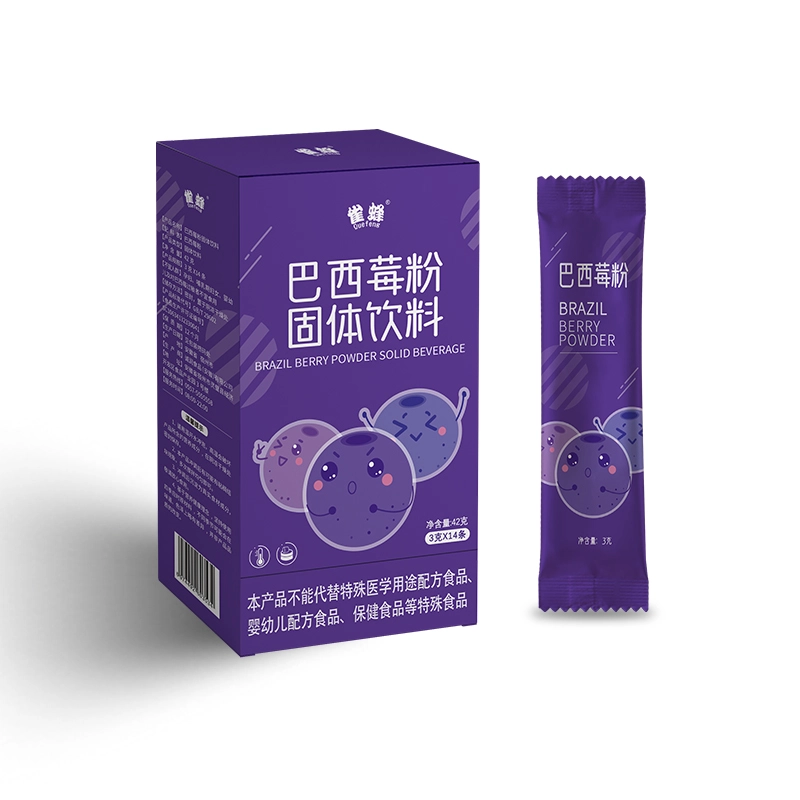
One practical advantage of powdered formats is the flexibility they offer in portioning and packaging. Single-serving sachets, for example, allow consumers to prepare a drink without measuring ingredients themselves. Chengrun Bio’s Brazil berry powder is listed in 3g individual portions, with 14 portions per box. This format may suit brands exploring convenient drink products, although the final application should be evaluated through sample testing.
Before choosing a powder for a commercial formulation, consider how customers will prepare the drink. Some products are designed to be mixed with water, while others may be combined with milk or added to smoothies. Testing the intended preparation method helps determine whether the product delivers the flavor, texture, and overall drinking experience your target customers expect.
Combining Berry Powder with Milk, Oats, and Other Ingredients
Berry powder can be used alongside ingredients such as milk, oats, nuts, and other fruit-based components to develop different beverage concepts. For example, a berry-flavored oat drink may appeal to consumers who prefer a familiar breakfast-style option, while a milk-based beverage may offer a creamier texture. The best combination depends on the desired flavor, product positioning, and preparation method.
However, ingredients that work well individually do not always perform equally well when combined. Acidity, sweetness, particle size, and moisture sensitivity can affect the taste and physical stability of a finished drink. Some powders may disperse quickly in water but behave differently in milk or thicker mixtures. This is why small-scale formulation trials are useful before moving into commercial production.
When testing combinations, change one variable at a time where practical. Compare different liquid bases, mixing temperatures, and ingredient ratios while keeping preparation conditions consistent. Record the results for flavor, texture, sedimentation, and ease of preparation. These observations can help product developers refine the formula and provide clearer specifications when discussing the project with an ingredient supplier.
Choosing the Right Fruit and Vegetable Powder for Your Formula
Not all powders made from fruits and vegetables have the same characteristics. Their flavor, color, composition, solubility, and intended uses depend on the source material and manufacturing process. When selecting fruit and vegetable powder for a beverage, buyers should first confirm the ingredient identity and review the supplier’s technical information rather than assuming that all products within this category are interchangeable.
Particle size is another factor worth considering. Fine powders may offer advantages in certain formulations, but a smaller particle size does not automatically guarantee better solubility or a smoother drink. The result also depends on the ingredient itself, the liquid used, the mixing process, and other components in the recipe. Product samples should therefore be tested under realistic preparation conditions.
It is equally important to review the ingredient declaration, nutrition information, shelf life, storage recommendations, and relevant quality documents. If a product is intended for a specific market, check whether its labeling and composition meet local requirements. These steps are especially useful for brands developing products under their own names, where consistency and accurate product information influence both customer trust and future purchasing decisions.
OEM/ODM Options for Customized Berry Powder Products
For brands planning to launch a new drink mix, OEM and ODM services can provide different routes to product development. OEM arrangements generally involve manufacturing according to the buyer’s requirements, while ODM services may include support with existing product concepts or development options. The exact scope varies by supplier, so buyers should clarify what is included before discussing production schedules or pricing.
When exploring OEM/ODM Brazil berry powder options, begin by explaining your target market, desired serving size, packaging format, and intended use. A supplier can then advise whether an existing product may fit the project or whether further formulation work is needed. Buyers should also ask about sample availability, customization limits, label artwork, packaging materials, and the process for approving the final product.
Packaging deserves attention early in the process. A single-serving sachet may be suitable for a portable drink mix, while a larger container may better suit frequent household use or food service applications. The choice affects product presentation, storage, and cost. Before production begins, confirm the final specifications in writing, including the ingredients, net weight, packaging configuration, and any agreed quality requirements.
Packaging, MOQ, and Bulk Purchasing Considerations
Commercial buyers should evaluate purchasing conditions alongside product performance. Chengrun Bio lists its Brazil berry powder in 3g portions, with 14 pieces per box, a minimum order quantity of 4,000 boxes, and OEM/ODM customization availability. The listed shelf life is 12 months. Buyers should confirm that these details apply to their specific order and ask whether customized packaging or other requirements would affect the purchasing terms.
Minimum order quantity can influence both initial investment and inventory planning. A larger order may be appropriate for an established product with predictable demand, but a new formulation may require more careful forecasting. Before committing, calculate the total number of portions, expected sales volume, storage capacity, and replenishment lead time. It is also sensible to request a complete quotation covering product costs, packaging, customization, and shipping.
Quality and documentation should remain part of the purchasing decision. Ask for relevant product specifications, production information, storage conditions, and documentation required for your destination market. Confirm the manufacturer’s details and the information shown on the final packaging. Clear communication before ordering can reduce misunderstandings and make it easier to manage repeat purchases as your product line develops.
Developing a Berry Powder Product for Your Brand
A successful powdered beverage begins with a clear understanding of the intended customer and how the product will be used. Berry powder can be explored for different drink concepts, but flavor compatibility, preparation performance, packaging, and product specifications all need to be evaluated together. Testing samples before production helps brands make decisions based on actual product performance rather than assumptions.
Chengrun Bio offers food and beverage product development and OEM/ODM customization options. Businesses interested in developing a berry-based drink mix can discuss their product concept, packaging preferences, and purchasing requirements with the team. Before placing an order, confirm the specific ingredient identity, sample availability, customization scope, MOQ, and delivery terms directly with the supplier.
Câu hỏi thường gặp
Can berry powder be mixed with milk or oats?
It may be suitable for these applications, depending on the powder’s composition and the desired finished product. Test the ingredient with the intended liquid or food base to evaluate flavor, texture, and mixing performance.
What should buyers check before purchasing berry powder in bulk?
Review the ingredient identity, product specifications, sample quality, packaging format, MOQ, shelf life, storage requirements, and relevant documentation. Compare the full purchasing cost rather than relying on the unit price alone.
What is the difference between OEM and ODM for berry powder products?
OEM generally refers to manufacturing based on the buyer’s requirements, while ODM may involve more product development or existing product options. Available services vary by supplier, so confirm the specific scope before proceeding.
Can Brazil berry powder be customized for private-label products?
Customization may be available depending on the supplier’s services and order requirements. Confirm the available packaging options, labeling process, sample approval procedure, and MOQ before placing an order.