

What Makes a Protein Bar a Practical Choice for Light Meal Replacement?
Release time: 2026-09-26
Table of Contents
Busy schedules often make it difficult to prepare a complete meal at the right time. For consumers who need something convenient between meetings, during a commute, or before heading to the next activity, a protein bar can provide a practical alternative to traditional snacks. Unlike many sweet snacks that mainly focus on flavor, a well-formulated Protein Bar can combine protein, dietary fiber, convenient portioning, and multiple flavor choices in one easy-to-carry format.
This makes protein bars particularly relevant to the growing light meal and convenient nutrition market. They are not necessarily intended to replace every component of a full meal, but they can work well when consumers need a quick, portion-controlled food option.
Why Are Protein Bars Becoming a Practical Light Meal Option?
The appeal of light meal products is closely related to convenience. Consumers may skip breakfast, have limited time during a workday, or need food that can be carried without preparation. A bar format addresses these situations because it can be eaten directly without mixing, heating, or additional preparation.
For brands developing light meal products, this format also provides flexibility. A protein bar can be positioned as a quick breakfast option, an afternoon snack, or a convenient food choice around physical activities. Its compact size makes it easier to integrate into different daily routines while maintaining a consistent serving format.
How Do Protein and Dietary Fiber Support the Product Concept?
Protein and dietary fiber are two important nutritional characteristics when developing products positioned around satiety and light meals. Protein contributes to daily protein intake, while dietary fiber can make a snack more substantial than products based primarily on sugar and refined carbohydrates.
For example, Chengrun’s Flavor Protein Bar provides 20.5g of protein and 10.1g of dietary fiber per 100g, with zero trans fatty acids according to its product information. This nutritional profile supports its positioning as a more substantial option for consumers looking beyond conventional snack foods.
A Dietary Fiber Protein Bar can therefore appeal to brands looking for a combination of protein and fiber in a convenient solid format. The exact role of the product should still depend on the overall diet and formulation rather than treating a single bar as a complete nutritional replacement.
What Makes a Protein Bar Convenient for Light Meal Replacement?
Convenience is one of the strongest advantages of the bar format. Consumers do not need a cup, shaker, water, or refrigeration before eating it. This is particularly useful in situations where traditional meal preparation is inconvenient.
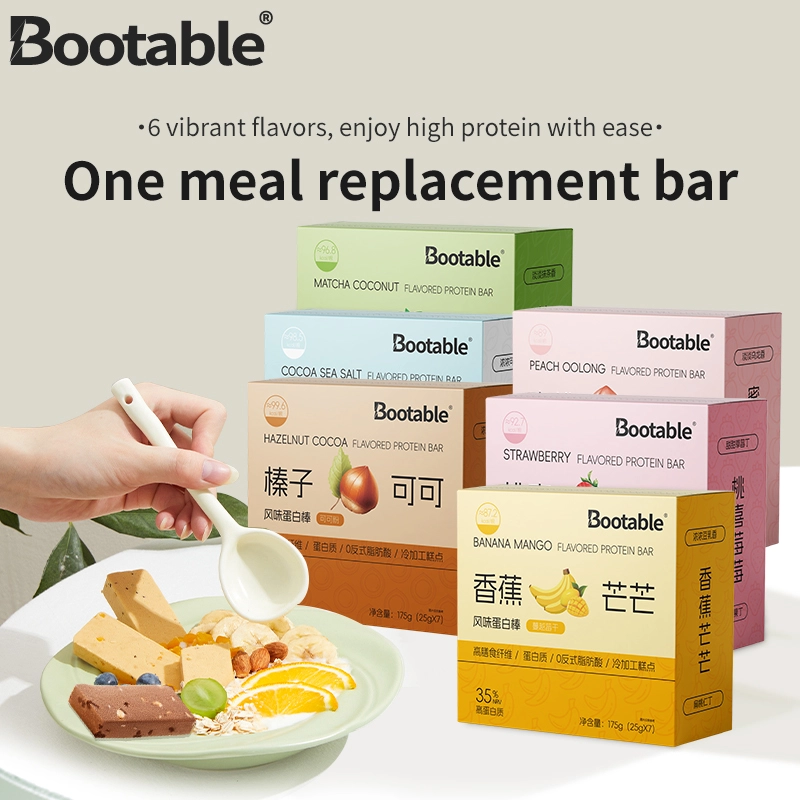
Chengrun’s Flavor Protein Bar is supplied in a 175g box containing seven pieces, creating a clear portion format for everyday use. A product like this can fit naturally into office drawers, travel bags, fitness bags, or other places where consumers may need a quick food option.
For brands, a standardized portion can also simplify packaging and product positioning. Instead of asking consumers to measure or prepare a serving, the product is already divided into individual pieces.
How Do Different Flavors Improve the Product Experience?
Nutrition is only one part of a successful light meal product. If consumers are expected to purchase a product repeatedly, flavor variety can also influence their overall experience.
Chengrun’s Flavor Protein Bar is available in six flavor combinations, including cocoa sea salt, peach oolong, matcha cranberry, strawberry apple chunks, banana mango, and hazelnut cocoa powder. This variety allows brands to create a broader product offering instead of relying on one flavor.
Multiple flavors can also help brands address different taste preferences and create mixed-flavor product lines. For OEM and ODM projects, flavor selection can become an important part of product differentiation, especially when several similar high-protein snacks are competing in the same market.
When Can a Protein Bar Work as a Light Meal Replacement?
A protein bar can be useful in several situations where consumers need a convenient food option but do not have time for a traditional meal. It may work as a quick breakfast when combined with other suitable foods, an afternoon option during a busy workday, or a convenient snack before or after physical activity.
It can also be practical during travel because of its compact form and easy storage. For consumers managing portion sizes, individually divided bars provide a straightforward way to control how much they eat at one time.
However, the intended use should be communicated accurately. A protein bar may serve as part of a Meal Replacement Protein Bar strategy or a light meal solution, but whether it can replace a complete meal depends on the product’s formulation, serving size, and the consumer’s overall nutritional needs.
What Should Brands Consider When Developing Protein Bars?
For brands entering the light meal market, product development involves more than selecting a high-protein formula. Protein content, dietary fiber, flavor, portion size, packaging, shelf life, and target consumer preferences all need to work together.
Supply requirements are also important for wholesale projects. Chengrun’s Flavor Protein Bar has a minimum order quantity of 5,000 boxes and supports OEM/ODM customization. This gives brands an option to develop a product around their preferred positioning while considering flavor combinations, packaging specifications, and market requirements.
Why Choose Chengrun for Protein Bar Development?
For brands looking for a practical product format for the light meal and convenient nutrition market, Chengrun’s Flavor Protein Bar combines multiple flavors with a protein- and fiber-focused formulation. The seven-piece, 175g box format is designed around convenient individual portions, while OEM/ODM services provide flexibility for wholesale product development.
With six available flavors, a 5,000-box minimum order, and spot delivery availability, the product can serve as a starting point for brands developing their own light meal or high-protein snack range.
FAQ
What is a protein bar used for?
A protein bar can be used as a convenient snack, light meal option, or source of dietary protein between meals. Its suitability depends on its formulation and the consumer’s overall dietary needs.
Can a protein bar replace a light meal?
Some protein bars can be positioned as part of a light meal replacement plan, particularly when they provide protein, dietary fiber, and an appropriate serving size. However, they should not automatically be considered a complete replacement for every meal.
What should brands consider when developing protein bars?
Brands should consider protein and fiber content, flavor selection, portion size, packaging, shelf life, target consumers, MOQ, and whether OEM/ODM customization is available.